Since 2021, Stanford Center for Ocean Solutions, Center for Human Rights and International Justice, Indonesia Ocean Justice Initiative, and FiftyEight have worked to address the lack of transparency and accountability in contracts and wage payments to tuna fisheries fishers.
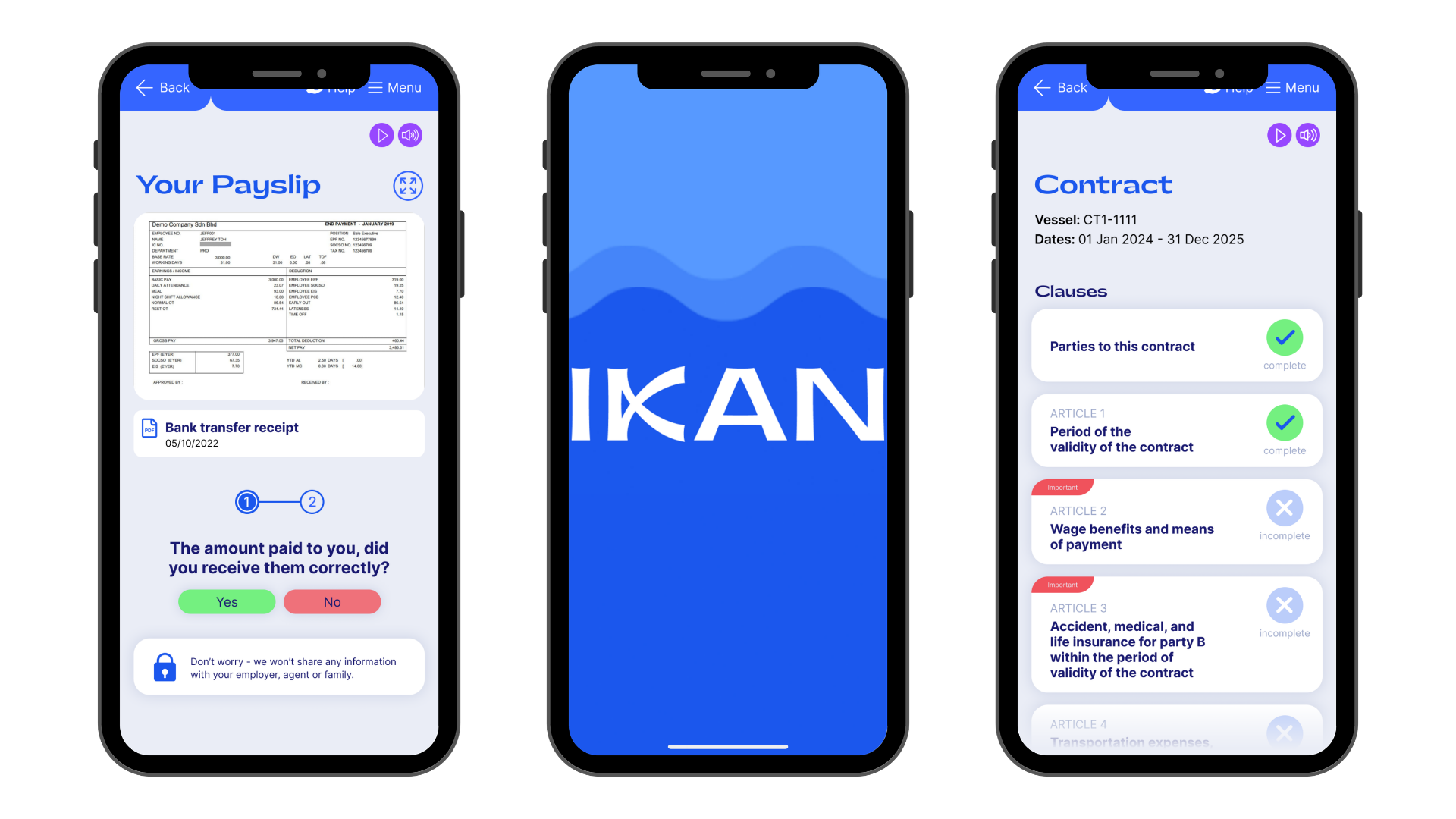
This culminated in the app, IKAN, which is being pilot tested now.
IKAN: WorkSmart Edition is a free and open version of the app that is open to non-pilot testers, focusing on empowering fishers with knowledge.
Environmental and social sustainability are inextricably linked, especially in the fisheries sector. Declining fish stocks can drive seafood producers to cut labor costs in order to keep fisheries profitable, perpetuating a cycle of exploitation.
This approach not only prolongs unsustainable fishing but also incentivises wage theft and other labor abuses as producers seek to maintain profit margins despite diminishing returns.
Reducing wage exploitation and empowering fishers to understand and exercise their rights are crucial steps toward ensuring safe and equitable work environments aboard fishing vessels.
The International Labour Organisation (ILO) estimates that 128,000 fishers are trapped in forced labor aboard fishing vessels worldwide, often far from shore. Labor abuses at sea include subjecting workers to forced labor, debt bondage, and poor working conditions. Due to the risk of repercussions, workers may not always report concerns.